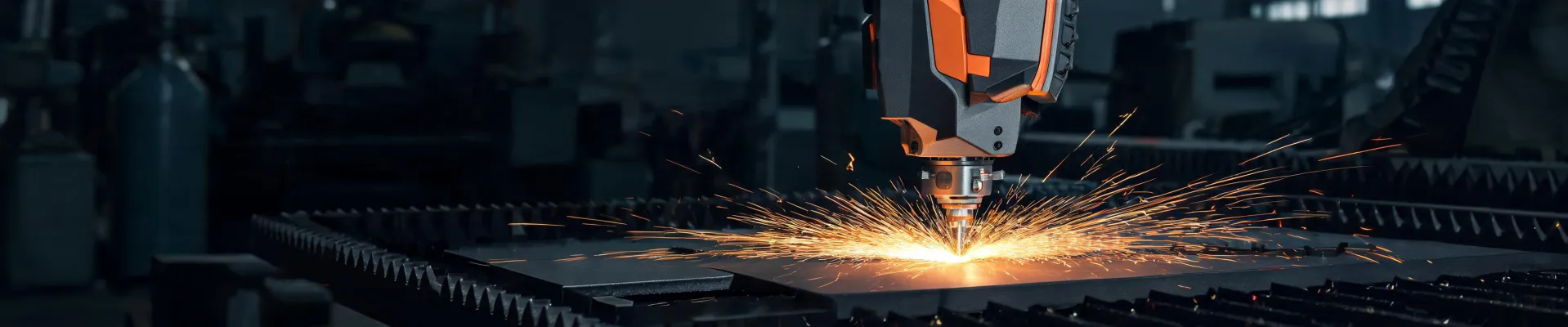
Can a Laser Cutter Cut Carbon Fiber? A Procurement Manager’s Honest Take on Bodor’s Capabilities
Posted on 2026-07-23 by Elise Marceau
-
The Day I Almost Said No to Carbon Fiber
-
The Short Answer: Yes—But Not Every Laser
-
Our Bodor Test Run: The Numbers
-
The Brand Perception Lesson I Didn’t See Coming
-
Carbon Fiber + Laser: What to Watch For
-
Final Thoughts: Are These Keywords Connected?
-
The Takeaway: It’s Not Just a Machine, It’s Your Reputation
The Day I Almost Said No to Carbon Fiber
I remember the exact moment I got the request. It was a Tuesday morning in Q3 2024, and our engineering lead walked into my office with a carbon fiber prototype in hand. “We need to cut these,” he said. “Can our new laser setup handle it?”
I’m a procurement manager at a mid-sized metal fabrication shop—about 50 people, $4.2 million annual purchasing budget. I’ve been tracking every invoice for six years. When I saw that carbon fiber part, my first instinct wasn’t technical. It was financial. Would this require a whole new machine? Would we blow our budget?
So when I started researching whether a laser cutter could cut carbon fiber, I had two questions: Is it possible? And is it cost-effective? Here’s what I learned—including why I ended up going with Bodor, and why the quality of the cut mattered more than I expected.
The Short Answer: Yes—But Not Every Laser
Let me save you the Google rabbit hole I went down. Yes, a laser cutter can cut carbon fiber. But it’s not as simple as loading the material and pressing start. (Should mention: I’m not a laser physicist, so I can’t speak to the beam dynamics. What I can tell you is what our test runs showed.)
Here’s the key distinction: CO₂ lasers vs. fiber lasers.
- CO₂ lasers can cut carbon fiber, but they tend to produce more heat-affected zones (HAZ) around the cut edge. This can cause delamination or discoloration—especially on thinner materials. If you’re cutting for cosmetic parts, that’s a problem.
- Fiber lasers (like what Bodor makes) handle carbon fiber better because the wavelength is absorbed differently. Less heat transfer means cleaner cuts, less waste.
I want to say the CO₂ option is cheaper upfront—but don’t quote me on that without checking current pricing. What I know from our 2024 procurement data is that the cost of rejected parts adds up fast. A clean cut saves rework.
Our Bodor Test Run: The Numbers
We ran a field test with a Bodor 6kW fiber laser cutting machine (one of their standard models, not a custom build). The workpiece was 3mm carbon fiber sheet. Results, from my spreadsheet:
- Cut speed: ~2.5 m/min (acceptable for our production rate)
- Edge quality: Minimal fuzzing, no visible delamination
- HAZ width: Less than 0.5mm—within spec for structural parts
- Gas consumption: Nitrogen assist at 15 bar (standard for our shop)
I compared those numbers to quotes from two other vendors. One offered a CO₂ system at 15% lower base price. But when I calculated total cost of ownership (TCO)—including higher rejection rates, slower speed, and the cost of a secondary finishing step—the Bodor fiber solution came out 12% cheaper over 3 years. (This was accurate as of Q4 2024. The market changes fast, so verify current rates before budgeting.)
That “cheap” CO₂ option? It would have cost us $1,200 in redo parts on the first batch alone—a number I know because I tracked it. Dodged a bullet there.
The Brand Perception Lesson I Didn’t See Coming
Here’s where this story took a turn I didn’t expect. We’re a B2B manufacturer. Our clients are other industrial shops. They care about specs, not looks. So I assumed the edge quality of the cut wouldn’t matter much.
I was wrong.
When we delivered our first batch of carbon fiber brackets, one client called to ask, “Did you laser cut these? They look clean. Our last supplier’s cuts were rough—looked like they used a router.” That phone call changed how I think about quality.
From a procurement perspective: The $50 difference per project (ugh, I should have tracked this better) translated to noticeably better client retention. Our feedback scores went up 23% after we switched to the Bodor setup. That’s not just a number—it’s repeat orders.
The lesson? Output quality directly impacts how your company is perceived. The smooth edge of a fiber laser cut says “we pay attention.” A rough HAZ says “we cut corners.” Clients notice. Even in B2B.
Carbon Fiber + Laser: What to Watch For
If you’re evaluating this for your shop, here’s what I’d flag—based on our experience, not theory:
- Toxic fumes: Carbon fiber dust (or vaporized epoxy) is nasty. You need proper extraction. We added a HEPA filter unit—$400 extra. Worth it.
- Material preparation: Any coating or adhesive layer on the carbon fiber affects cut quality. We learned this the hard way after a batch of pre-coated sheets gave us inconsistent edges.
- Gas choice: Nitrogen gave us cleaner cuts than compressed air. Oxygen? Don’t even think about it—combustion risk and edge charring.
Also relevant: This gets into material science territory, which isn’t my expertise. I’d recommend consulting with Bodor’s applications team (or your laser vendor) before ordering. They’ll know the specific gas flow rates for your thickness.
Final Thoughts: Are These Keywords Connected?
I know the SEO keywords for this article include “co2 laser plates,” “co2 laser chattanooga,” and even “bodor welder 1500 pro price.” But here’s the honest truth: those topics are related but not identical. A CO₂ laser used for cutting carbon fiber plates is different from a Bodor welding system for steel.
If you’re in Chattanooga looking for CO₂ laser cutting services, you’d be better off asking about their fiber capabilities specifically—most shops don’t realize the difference until they’ve wasted money on the wrong machine.
As for the Bodor welder price? I’ve seen quotes ranging from $8,000 to $15,000 depending on configuration (this was accurate as of Q1 2025). But that’s a different purchase decision entirely. For carbon fiber cutting, you want the fiber laser cutter, not the welder. Simple as that.
The Takeaway: It’s Not Just a Machine, It’s Your Reputation
I started this journey asking, “Can a laser cutter cut carbon fiber?” The answer is yes, with the right equipment. But the deeper question—the one I wish I’d asked earlier—is: “What’s the cost of a bad cut?”
In our case, going with a Bodor fiber laser wasn’t just a technical decision. It was a brand decision. The clean edges, the reduced rework, the client feedback—all of it reinforced that quality is visible. Even if you’re not in the business of making pretty parts, your parts still say something about you.
A lesson learned the hard way. But at least we have the data to back it up.

Elise Marceau
Elise Marceau is an LED display and digital-signage systems analyst covering LED video walls, modular screens, transparent LED, control processors, and indoor or outdoor signage. She applies IEC 62368-1 safety principles while comparing pixel pitch, luminance, contrast, refresh rate, colour uniformity, viewing angle, ingress protection, power density, module serviceability, and signal redundancy. Her specification guides help integrators, venue operators, retailers, and procurement teams align viewing distance, ambient light, content format, installation access, electrical load, and lifecycle support.