The $15 Nozzle That Cost Us $1,430: Why I Buy Genuine Bodor Laser Spare Parts Now
Posted on 2026-08-24 by Elise Marceau
When I took over purchasing for our fabrication shop in 2021, the first real directive from accounting was: cut the consumable budget. "We're paying $58 for a laser nozzle? They're $15 on eBay."
I agreed. Looked like robbery to me too.
Seven months later, I stopped buying cheap nozzles altogether. Not because I got in trouble — because the numbers came back and made me look bad. Here's the thing I wish someone had explained before I learned it the expensive way: for a machine like our Bodor fiber laser, the nozzle price on the invoice is the least important number in the entire purchasing decision.
The Surface Problem: Genuine Parts Look Overpriced
If you've ever shopped for laser cutting consumables, you know the drill. The operator says cut quality is drifting. The parts rep quotes $58 for a genuine Bodor laser nozzle. You open another tab and find "compatible" nozzles for $12–18, and in the photos they look identical. Same thread. Same shape. Same shiny brass.
Every bone in a buyer's body says order the cheap ones. To be fair, the first one might work fine. The second one, too. The problems show up later, in ways that are nearly impossible to trace back to a $15 part.
The Deeper Issue: A Nozzle Is Not a Hole With Threads
I'm not an engineer. I'm the person who processes the purchase orders and reconciles the credit card, in a 60-person shop that's been running laser cutting for a decade. I manage consumable purchasing across eleven vendors — roughly $180,000 a year — and I report to both operations and finance. But after five years in this chair, I know one thing for sure: laser nozzles are precision components, and the precision is the product.
The orifice diameter. The seat angle. The internal chamber geometry. The centering of the hole relative to the thread. All of it controls how shielding gas flows around a beam focus that's a fraction of a millimeter wide. Get any one of these slightly off and the cut quality degrades — not dramatically, just enough to notice.
I took a caliper to a batch of aftermarket nozzles once, just to understand why the cuts looked wrong. The orifice wasn't centered. Not egregiously. But on a 6kW fiber laser, "almost centered" is a different part entirely.
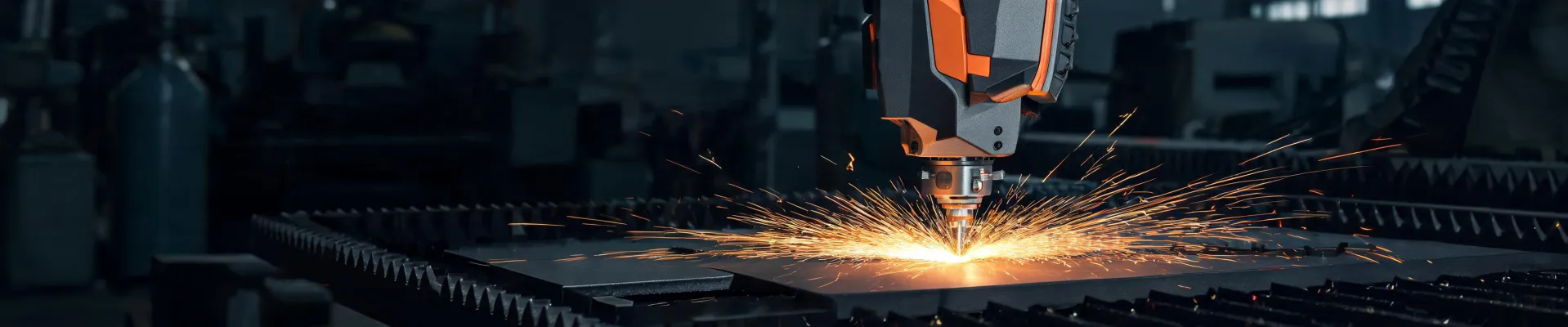
Bodor's cutting system is engineered as one unit: cutting head, lens, nozzle, gas pressure, machine settings. Genuine Bodor laser spare parts are matched to that system. Aftermarket parts are matched to a price point.
The Part That Looks the Same But Isn't
You'd think this would be obvious. It's not. We also run a DeWalt plasma cutter on the other side of the shop, and the same story played out there. I stocked aftermarket torch consumables because they were half the OEM price. Within a month, the pilot arc started acting up. The torch would spark and struggle, but it couldn't hold a stable pilot arc. The operator swapped consumables twice, assuming normal wear. No change.
That was when the search boxes in the shop started collecting gems like "plasma cutter pilot arc not working" and "dewalt plasma cutter parts" and, my personal favorite, "co2 laser queens" — which came through as an internal work order and I had to call the floor guy to decode. (He meant CO2 laser something. I honestly don't know what the "queens" was about, and at this point I'm afraid to ask.)
That's the real disconnect in a shop. The buyer looks at price. The operator looks at a machine that won't run right. They're both talking past each other, and the $15 part sits in the middle of the conversation.
The Real Cost of "Saving" $900
Here's the episode that converted me for good. In early 2023, I ordered 20 compatible nozzles for the Bodor at $15 each — $300 delivered. Genuine Bodor laser nozzles for the same quantity came to $1,160. I was proud of that $860 difference. I put it in my monthly report. I think I even highlighted it.
Then the operator started flagging random cut quality issues on 8mm mild steel. Dross on one edge, clean on the next. We rechecked focus, lens, gas pressure, machine calibration. All fine. I scheduled a service visit — $480 — and the tech confirmed the machine was running to spec. (He also asked what nozzles were on the head, and I conveniently changed the subject. That was dumb of me, and I knew better.)
Then a 6mm plate job for a long-time customer needed to be re-cut. Two flanges were out of tolerance because of dross. Rework cost: $650 in labor and material, plus a customer conversation I'd rather forget.
So: $300 nozzles + $480 service call + $650 rework = $1,430. Against the $860 I "saved." Every spreadsheet had said buy the cheap parts. My gut said the operator's complaints were getting worse. The spreadsheet won. That's on me.
We switched back to genuine Bodor parts and the complaints stopped. Take that with a grain of salt, but the timeline is what it is. Oh — and the aftermarket supplier's invoice came through as a scanned note with no tax ID. Finance rejected it. I wrote the amount off to the department budget. So the real total was higher than $1,430. Not that I keep a ledger of my mistakes, but if I did, that one would be on page one.
The Math That Changed My Process
The most frustrating part of the whole episode: there was no dramatic failure. No blown head, no melted nozzle, no single crash. Just a slow erosion of run quality that cost more than any one dramatic failure would have.
I don't buy from the cheapest supplier anymore. I buy from the supplier whose failure costs me the least. It sounds like a slogan, but the calculation behind it is real. With 70-80 orders a year, decisions compound, so I run this simple list before any consumable switch:
- Unit price — still matters, it's my job.
- Expected life — genuine parts usually last longer, but consistency matters more than lifespan.
- Downtime cost if the part fails early — for a 6kW laser, an hour of lost production is easily $100–150 in machine overhead before labor.
- Rework risk — a 2% scrap rate on a $2,000 material order is $40. On a bad month, that's more than the whole nozzle line item.
- Service call risk — the $480 visit that finds nothing.
- Invoicing and compliance — if the vendor can't produce a proper invoice, it's not a supplier. It's a liability.
Once it's on paper like that, the cheapest option looks a lot less clever. I still shop around — I'd be lying if I said otherwise — but I'm calculating total cost, not unit price.
What I'd Tell Another Buyer
If you're in the same seat I was — the person buying parts who doesn't run the machine — here's the short version, because I know you don't have time for another manifesto:
- Put a reference sheet on the wall. Part numbers, photos, names. Kill the "co2 laser queens" requests before they reach your inbox.
- Buy machine-critical consumables from someone official. For Bodor machines, that means the manufacturer's own channel or a verified distributor. Part numbers need to match the cutting head.
- Track cost per good part produced, not total purchase order value. Review it quarterly, not when a problem shows up.
- Respect OEM specs for anything that touches the cut — laser nozzles, plasma torch consumables, shielding gas. Even for the DeWalt.
A genuine nozzle costs more. I won't argue with that. But the invoice isn't the cost. The cost is whether the machine runs, whether the parts pass inspection, whether finance can close the month. I learned that the hard way so you don't have to.
"Why is the genuine Bodor nozzle $58?" Because every time it goes on the head, you know what it's going to do. When a job's sitting on the table waiting for a clean cut, that predictability is worth real money.
That's the whole argument, really. Predictability.

Elise Marceau
Elise Marceau is an LED display and digital-signage systems analyst covering LED video walls, modular screens, transparent LED, control processors, and indoor or outdoor signage. She applies IEC 62368-1 safety principles while comparing pixel pitch, luminance, contrast, refresh rate, colour uniformity, viewing angle, ingress protection, power density, module serviceability, and signal redundancy. Her specification guides help integrators, venue operators, retailers, and procurement teams align viewing distance, ambient light, content format, installation access, electrical load, and lifecycle support.