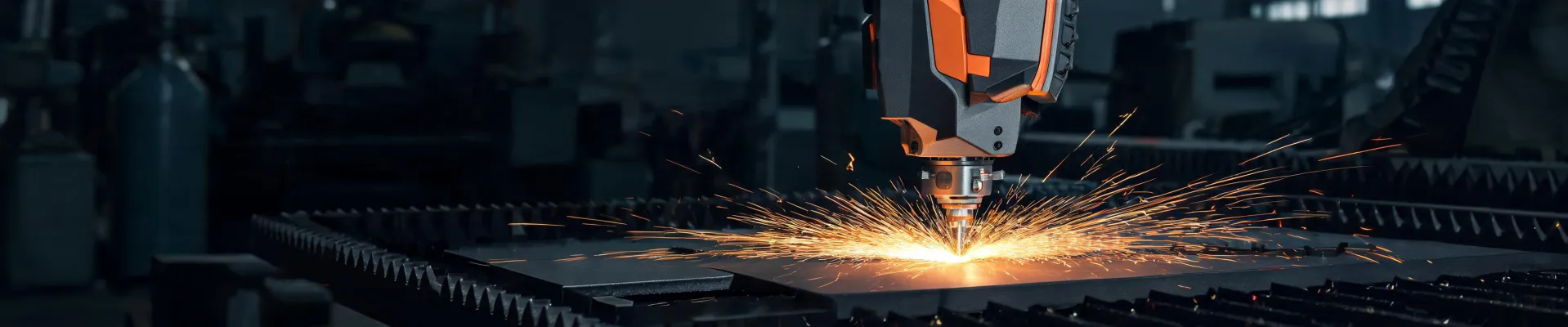
The 48-Hour Rescue: What a CO2 Helix Laser and a Bodor Nozzle Taught Me About Industrial Fiber Lasers
Posted on 2026-08-07 by Elise Marceau
In March 2024, at 3:47 on a Thursday afternoon, I got the call. A purchasing manager I'd worked with before was about thirty seconds away from panic.
"Can you cut 42 stainless steel enclosures by Monday? Our CO2 helix laser is cutting like garbage, and we're supposed to ship to a medical device customer next Wednesday."
The normal lead time for that job was eight to ten business days. We had about eighty-two hours, including a weekend, and a machine schedule that was already full. I said yes before I checked the material spec. After nine years and more than 200 rush orders, I should have known better.
The Call That Started With a Nozzle Question
The client was convinced the problem was consumables. He'd been hunting for a Bodor nozzle for sale because his operator thought the cut quality had gone downhill after a rough setup. Maybe the nozzle bore was damaged. Maybe the copper contact was worn. It wasn't a crazy theory. If a laser head's nozzle is nicked or the centering is off, the assist gas flow gets distorted and the cut edge suffers.
But then I asked the question I ask every time someone calls with "urgent" and "laser" in the same sentence: What changed? Nothing, he said. Same machine. Same settings. Same material. Then he paused. "Well, our supplier upgraded the stainless steel last month. Does that matter?"
Yes. Yes, it matters.
The material wasn't 304. It was 316L. The drawings said so. The purchase order said so. His supplier had quietly changed the alloy because of a pricing issue, and nobody had updated the cutting program. The CO2 helix laser was cutting 316L with parameters tuned for 304. That mismatch is enough to turn a clean cut into dark, rough edges with a serious heat-affected zone. He blamed the nozzle. The nozzle was fine.
What "CO2 Laser Treatment Healing Process" Really Means in a Fabrication Shop
If you've ever searched for "CO2 laser treatment healing process," you probably got results about dermatology and skin resurfacing. That's not what I'm talking about. In a metal workshop, the CO2 laser treatment healing process is the hidden time you spend cleaning up the edge before the part can move to the next operation. It's grinding off the dross. It's removing the oxidation. It's waiting for the material to cool enough that it won't warp under handling. Some shops call it post-processing, but "healing" fits, because the cut edge looks almost wounded compared to what a fiber laser can do.
This client had been living with long healing times for years without realizing it. His operators had internalized it as normal. The material change from 304 to 316L pushed that hidden delay over the edge, and suddenly a 48-hour window was impossible.
The real fix wasn't a new nozzle. It was the right laser technology for the material. This is why fiber laser industrial cutting has become the default for many shops working with stainless steel and aluminum. The wavelength is absorbed much more efficiently by metals, so the cut edge is cleaner, the heat-affected zone is smaller, and the part is ready for the next step almost immediately.
Why We Trusted a Fiber Laser (and Genuine Bodor Nozzles)
Our shop runs a Bodor fiber laser that we bought after I spent two weekends reading Bodor laser reviews on forums, talking to other shop owners, and finally touring a facility that had run one for over two years. I'm not the kind of person who buys equipment based on a brochure. I wanted to see how the machine held up when a job was already late and the operator was tired.
That machine has bailed us out more times than I can count. But for this specific job, I also wanted genuine Bodor nozzles, not clones. I found a supplier listing a Bodor nozzle for sale at a price that was almost suspiciously reasonable. Part of me wondered whether they were counterfeit. The machine was already running a scheduled production batch, and swapping the cutting head would cost us time. "Do we really need to change it?" I asked my lead guy. He gave me the look he always gives me when I'm about to overcomplicate something. "We have a box of them. It takes twelve minutes. Just do it."
Twelve minutes. That was the difference between guessing and knowing.
The Test Cut and the Long Weekend
We cut three test pieces in 316L with the same program the client was using, but adjusted for the new material and using the fresh Bodor nozzle. The parts came out clean. No dross. No discoloration. The flange bend lines aligned. I put a micrometer on the hole diameters and a square against every edge. The tolerance was right where it needed to be.
I hit "confirm" on the job and immediately felt a knot in my stomach. What if the material batch was inconsistent? What if the supplier's "316L" was actually 316L with a different mill finish? What if the edges looked good under a magnifying glass but failed the client's surface requirement? I almost called a friend in aerospace who had a surface profilometer. I didn't, because we didn't have time. That was the right call, but it didn't feel like it at the time.
Friday morning, we started cutting. By Friday afternoon, the unloading clamp shifted and we scrapped a panel. By Saturday, we were fighting a computer issue that turned out to be a corrupt tool library file. Every hour of the weekend was a small battle. We kept checking our work, re-cutting instead of fudging, and by Sunday evening the last flange was formed and the edge condition looked better than the client's original spec.
The Hidden Cost of a Rush Order
Here's what that 48-hour rescue actually cost: overtime, roughly $800; expedited shipping, about $650; a set of genuine Bodor nozzles, $120; and one night of sleep for me. The client's alternative was missing a $40,000 contract, plus potential penalties. I want to say those numbers are accurate, but don't quote me on the exact invoices. The point is the total was still less than one day of the alternative's schedule delay.
I have mixed feelings about rush orders. Part of me loves the adrenaline. Another part remembers that most of them exist because somebody skipped a check somewhere. The fix is rarely exciting. It's a material spec read twice, a test cut, and a spare Bodor nozzle on the shelf, purchased before you need it.
What This Job Taught Me About Prevention
Five minutes of verification beats five days of correction. The test cut took 45 minutes, and it bought us a clean weekend.
If you're running a CO2 helix laser and your stainless steel quality has suddenly gone bad, stop before you order replacement parts. Check the material. Check the batch number. Check the drawings. And if you're thinking about making the switch, read the honest Bodor laser reviews from people who run these machines daily—then do your own test cut.
The nozzle matters. The laser matters more. The habit of checking everything before you spend money on the fix? That's what actually saves the contract.

Elise Marceau
Elise Marceau is an LED display and digital-signage systems analyst covering LED video walls, modular screens, transparent LED, control processors, and indoor or outdoor signage. She applies IEC 62368-1 safety principles while comparing pixel pitch, luminance, contrast, refresh rate, colour uniformity, viewing angle, ingress protection, power density, module serviceability, and signal redundancy. Her specification guides help integrators, venue operators, retailers, and procurement teams align viewing distance, ambient light, content format, installation access, electrical load, and lifecycle support.