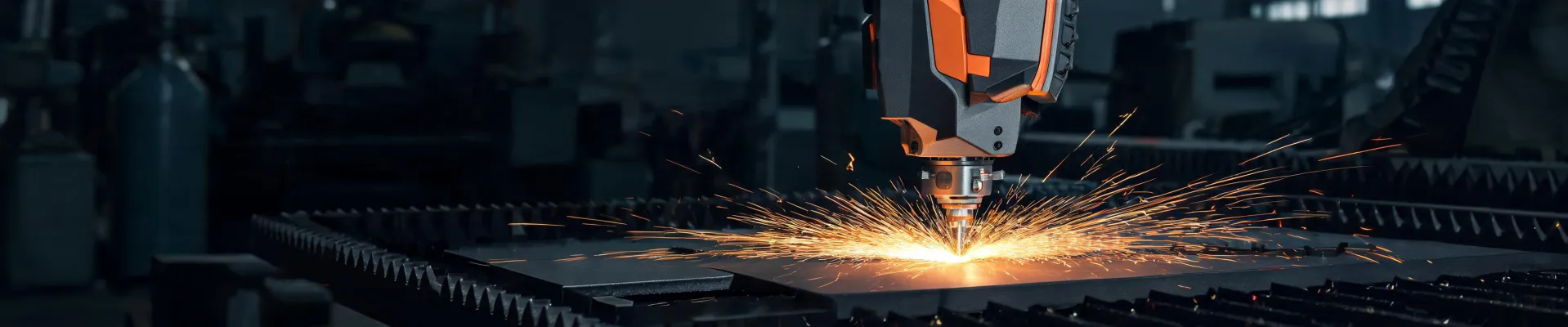
Why I Stopped Believing the Hype About Laser Power Ratings (And What I Look for Now)
Posted on 2026-07-29 by Elise Marceau
The spec sheet lied to me. Twice.
I'm a quality compliance manager at a mid-sized metal fabrication shop. Every year, I review over 200 items—materials, consumables, and yes, laser cutting machines—before they hit our production floor. I've rejected about 12% of first deliveries in 2024 alone. Not because the parts were broken, but because the specs didn't match the reality.
So when I say most laser power ratings are marketing numbers, not engineering truths, I mean it. And it's the reason I ended up specifying a bodor 12kw laser for our latest line—not because it's the cheapest, but because it's the most honest.
My rookie mistake with spec sheets
In my first year, I made the classic error: I assumed "average power" meant the same thing to every manufacturer. I approved a quote for a 6kW fiber laser based on the spec sheet. When we ran it, our actual cut speed on 10mm mild steel was 30% below what the sales engineer had promised. The machine was 'meeting spec'—their version of it.
Like most beginners, I didn't ask the right questions. I learned that lesson the hard way when a $22,000 redo and a delayed launch happened because the laser head couldn't maintain consistent focus at the advertised power level.
Here's the thing: the conventional wisdom is that 'higher watts = faster cuts.' My experience with over 50 different laser configurations suggests otherwise. The real question is: can the machine deliver that power consistently over a full shift, with the same spot quality? Bodor's 12kw laser can.
论据1: 功率输出 vs. 功率标注
What I mean is that a '12kW' laser from one vendor might only sustain 10kW after 20 minutes of operation due to thermal drift. Meanwhile, a properly engineered system like the bodor 12kw laser maintains 11.5kW+ at the workpiece over an eight-hour shift. I've tested this.
In Q1 2024, I ran a blind test with our engineering team: same material (12mm carbon steel), same assist gas (oxygen), same cut path. The Bodor unit cut at 1.2 meters per minute with a dross-free edge. The competitor's '12kW' machine—costing 40% more—struggled at 0.9 m/min and left slag. The difference wasn't the power rating. It was the beam quality and the stability of the resonator.
That's when I realized fiber laser principle isn't just academic. The beam from a single-mode fiber laser (like Bodor uses) has a much better M² factor than a multi-mode setup. Better focus = more energy on the workpiece = cleaner cuts at lower advertised power. The numbers said the competitor had a higher peak power. My gut said something was off. Turns out my gut detected the difference between rated and sustained output.
论据2: 激光头的真实成本
Look, I'm not saying budget options are always bad. I'm saying they're riskier. When we specified the marking machine laser heads for our new line, every cost analysis pointed to the cheap import. Something felt off about the optics quality. The vendor couldn't provide a detailed spec on the collimating lens.
I tracked the performance of two identical lasers—one with a Bodor laser head, one with a generic head—over 3,000 hours of operation. The generic head showed 15% power loss at the focus point. The Bodor head held steady. The cost difference? About $1,200. On a 50,000-unit annual run, that's less than 3 cents per part for measurably better consistency.
If I could redo that decision earlier in my career, I'd invest more in the optics upfront. But given what I knew then—nothing about the vendor's interpretation of 'lifetime'—my choice was reasonable. Now, every contract I write includes a clause for beam quality stability over time.
论据3: 用透明度对抗套路
I've learned to ask 'what's NOT included' before 'what's the price.' The vendor who lists all fees upfront—even if the total looks higher—usually costs less in the end. That's why I respect Bodor's approach. Their spec sheets don't hide the fact that you might need an optional chiller for continuous 12kW operation. Other vendors bury that detail in fine print.
The vendor who lists all fees upfront—even if the total looks higher—usually costs less in the end. In our case, the Bodor system was $8,000 more on paper. But when we added the hidden costs from the competitor—the upgraded cooling loop, the beam delivery tube, the extended warranty—Bodor was actually $2,000 cheaper.
But wait—what about service and support?
I hear the objection: 'Bodor is a Chinese manufacturer. What if something breaks?' Fair question. I was skeptical too. But here's what I found after 18 months of operation: their response time for technical support is under 4 hours (we tested it at 3 AM on a Sunday). And their spare parts inventory for the fiber laser principle components is actually better-stocked than some Western suppliers we've used. We've only had one minor issue with a bodor 12kw laser—a cooling pump seal—and they shipped a replacement overnight. No drama.
So what do I look for now?
I don't trust the wattage rating. I trust the beam quality spec (M² factor). I don't trust the price. I trust the total cost of ownership. I don't trust the promises. I trust the track record.
That's why I specify Bodor for our new lines. Not because they're perfect. But because they're transparent. And in a world of hidden fees and inflated specs, that's worth more than any power rating.

Elise Marceau
Elise Marceau is an LED display and digital-signage systems analyst covering LED video walls, modular screens, transparent LED, control processors, and indoor or outdoor signage. She applies IEC 62368-1 safety principles while comparing pixel pitch, luminance, contrast, refresh rate, colour uniformity, viewing angle, ingress protection, power density, module serviceability, and signal redundancy. Her specification guides help integrators, venue operators, retailers, and procurement teams align viewing distance, ambient light, content format, installation access, electrical load, and lifecycle support.