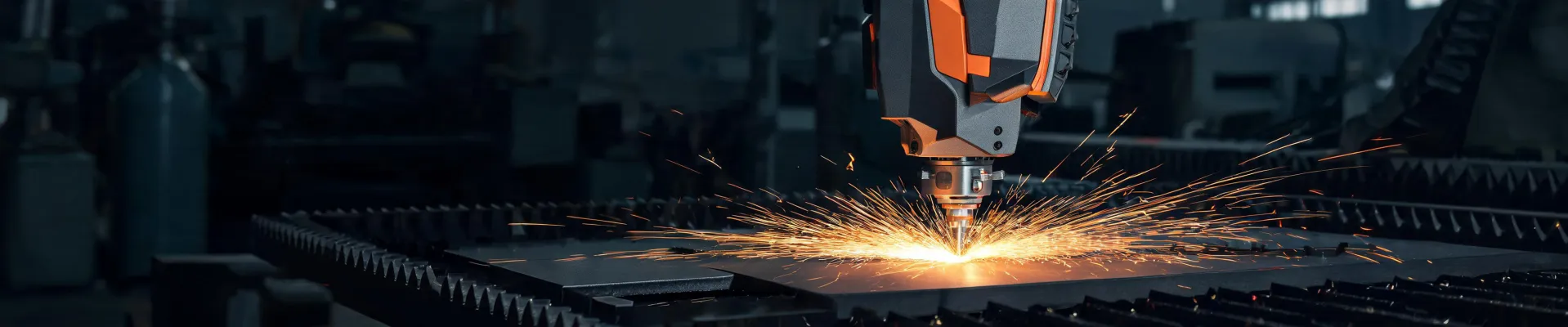
I Almost Bought the Wrong Laser Engraver: My Real-World Procurement Notes from Amarillo
Posted on 2026-11-13 by Farah Rahman
The Purchase Request That Looked Simple
In November 2024, our marketing team sent over a purchase requisition: one laser engraver, budget $6,000, needed before Q1 branding merch season.
I handle procurement for a 120-person manufacturing company. I've ordered office furniture, fleet maintenance contracts, and custom promotional goods. Laser engraver? That was new. But I assumed it was a routine buy. Find a vendor, compare quotes, submit the PO.
Six weeks and three near-mistakes later, I realized the real risk had nothing to do with price.
What I Thought the Problem Was (And What It Actually Was)
Initially, I thought my job was straightforward: pick a laser engraver that fits the budget. Glowforge kept showing up in search results. Their site is clean, pricing is transparent, and the Glowforge Aura craft laser is marketed as an entry-level dream for makers and small businesses.
So I almost bought it. $1,200, free shipping, cloud-based software. Done, right?
Wrong. Here's what I didn't understand until I started digging:
Not All Laser Engravers Work the Same Way
There are three main laser types, and they are not interchangeable:
- Diode lasers — These are your entry-level machines. The Glowforge Aura uses a diode laser. It handles thin wood, acrylic, leather, and fabric reasonably well. But it's slow on thicker materials and essentially useless on metal or glass.
- CO2 lasers — This is what the Glowforge Pro and Plus use. CO2 lasers cut and engrave thicker wood, acrylic, leather, glass, and some coated metals. This is the "classic" laser engraver category.
- Fiber lasers — These use a fiber laser resonator (a solid gain medium) and are primarily for metal marking and engraving. They're specialized and not flexible for general craft or gift work.
Here's the kicker: marketing wanted to engrave metal-branded keychains, nameplates, and notebook covers. The Aura's diode laser isn't built for that. They would have needed a CO2 laser or a separate outsourced metal marking service.
If I had just bought the Aura because it was cheap and had the Glowforge name on it, it would have sat unused while we filed another requisition six months later.
The Deeper Issue: Setup Costs and the NMFC Number
Once I settled on the right laser type (CO2, given the material mix), I found a regional dealer in Amarillo, Texas that carried refurbished units. The machine itself was about 150 lbs with the crate — not enormous, but heavy enough that shipping matters.
That's when I learned about NMFC numbers. NMFC stands for National Motor Freight Classification. It's a freight class system based on density, handling, liability, and stowability. Every LTL shipment gets classified.
Why does this matter? Because if the vendor gives you the wrong NMFC number for your laser engraving machine, your freight cost is wrong. And when freight is calculated wrong, the invoice gets rejected. Then someone — usually me — has to explain why shipping was $180 over the quote.
From what I gathered, laser engravers typically fall into freight classes 85–110 depending on weight and dimensions. But different vendors classify similar machines differently based on packaging and description. Two nearly identical CO2 lasers from two suppliers can carry different NMFC numbers. That makes comparing total landed costs genuinely difficult.
I learned this the hard way back in 2020 when I ordered steel filing cabinets from a new vendor who couldn't provide a proper invoice — handwritten receipt only. Finance rejected the expense report. I ate $2,400 out of the department budget. Now I verify invoicing capability and freight classification before placing any order.
The Cost of Getting It Wrong
Let me break down what I found on real costs, since most vendor sites won't put this in one place:
- Glowforge Aura: ~$1,200. Great for crafting, limited for business-grade material work. If we needed metal engraving, it's a non-starter.
- CO2 laser (entry-level refurbished): ~$3,500–$4,500 from a regional dealer like the one we found in Amarillo. Plus ~$200–$400 for freight, depending on NMFC class and distance.
- Fiber laser (metal marking): $8,000+. Completely different budget category.
- CO2 laser tube replacement: $1,000–$2,000 every 2,000–4,000 hours of use. This is a wear item the way tires are on a car. Budget for it.
- Setup and training: $0–$500 depending on vendor. Some included it, some charged extra.
Buying the $1,200 Aura would have actually cost us more in the long run — wasted spend on a machine that couldn't do the job, plus the delay and re-procurement time.
I'm not 100% sure the refurbished route was the best call long-term. But it fit our actual material requirements at a price that finance didn't push back on.
What We Did (Short Version)
We went back to marketing and got specific: 1/4" birch plywood, 1/8" acrylic, and some glass etching. No metal. That clarified the laser type immediately.
We sourced a refurbished CO2 desktop laser from an Amarillo dealer who could provide correct NMFC classification and a proper invoice. Total landed cost: ~$4,200. Not the cheapest option, not the most expensive. Right for what we needed.
If metal engraving becomes a priority later, I'll split the work: standard laser for wood and acrylic, outsourced marking for metal. A specialist vendor who says "we don't do metal" earns more of my trust than one who promises everything.
What I'd Tell the Next Admin Buyer
Match the laser type to the material first. Everything else — price, brand, software — comes second. The Glowforge name is strong, but their Aura is a craft laser, not a production machine. Knowing what a tool isn't good at is as important as knowing what it does.
And get the NMFC number in writing before you approve the freight quote. That single line item has caused more invoice-rejection headaches in my department than any price negotiation ever has.
Farah Rahman
Farah Rahman is an arc-welding and plasma-cutting equipment analyst covering MIG, TIG, MMA or stick welders, multiprocess power sources, wire feeders, torches, and plasma cutters. She uses IEC 60974-1 safety and performance requirements while examining output range, duty cycle, open-circuit voltage, arc stability, wire-feed speed, gas flow, travel speed, cut capacity, power factor, cooling, and environmental rating. Her comparisons help fabrication shops, maintenance teams, and buyers match process, material thickness, joint quality, portability, electrical service, consumables, and production tempo.