Plasma Cutter ATS-EPC40 vs Bodor Laser Cutting Machine: My Honest 3-Year Comparison
Posted on 2026-08-14 by Elise Marceau
-
Cut Quality: The Fiber Laser Wins Big, Until It Doesn't
-
Consumable Costs: CO2 Laser Consumables Are Not Fiber Laser Consumables
-
Speed and Workflow: The 10x Gap, and the Catch Nobody Mentions
-
Total Cost of Ownership: The Number That Actually Mattered
-
The Unexpected Addition: A Small Laser Welding Machine
-
So Which Should You Buy? My Honest Framework
I run a small fabrication shop in Ohio. We cut ornamental iron, structural brackets, custom machine guards—the jobs that most large fab shops quote too high because they're fiddly. For my first 12 years, I got by with a handheld plasma torch, a band saw, and a lot of patience. Then in December 2021, I made two equipment purchases: an ATS-EPC40 plasma cutter and, ten months later, a Bodor fiber laser cutting machine. One of those decisions was smart. The other cost me $4,800 in mistakes that I'm still paying for.
Full disclosure: I'm not a Bodor reseller, I don't have an affiliate relationship with them, and I've never asked for sponsorship. I'm just a shop owner who documents costs carefully. This comparison covers cut quality, consumable costs, speed and workflow efficiency, and true cost per part over 24 months of parallel production.
Here's the framework I'll use:
- Cut quality and edge finish
- Consumables and operating costs (with a deep look at CO2 vs fiber)
- Speed and workflow efficiency
- Cost per part over 24 months
One thing before I start: this is not a "laser beats plasma" article. If I'd skipped the plasma cutter and gone straight to fiber, I'd have overspent on work I wasn't ready for. Both machines have a lane. The trick is knowing which one is yours—and I had to learn that the expensive way.
Cut Quality: The Fiber Laser Wins Big, Until It Doesn't
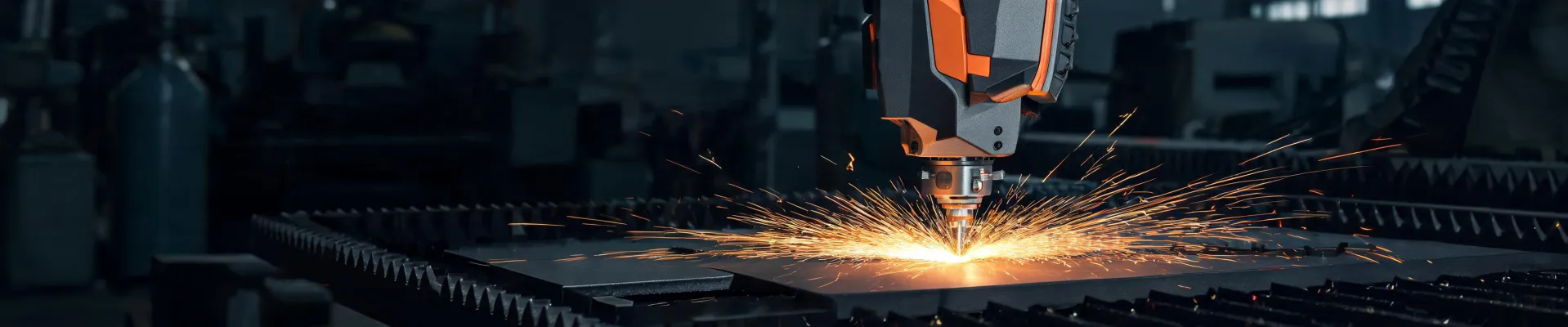
Cut quality is where the Bodor makes its case. On 3mm mild steel, the fiber laser cuts with a kerf around 0.15mm, holds tolerance to roughly ±0.1mm, and the part comes off the table clean enough to weld or bend without secondary work. The ATS-EPC40 plasma cutter, by comparison, produces a wider kerf, a larger heat-affected zone, and—if you get the amperage or speed wrong—a dross buildup that takes longer to grind off than it took to cut the profile.
I learned this the hard way in September 2022. I cut 47 brackets for a contractor on the plasma cutter. Every part looked fine on the table. On site, the slots were off by about 1.5mm and none of the bolts lined up. I knew I should have cut a test piece and checked the fit before shipping the batch, but I thought, well, "what are the odds?" The odds caught up with me. That error cost $890 in rework plus a week of credibility with a client I'd been courting for months.
But here's the plot twist: on material thicker than 20mm, the plasma cutter holds its own. A 12kW fiber laser can cut 25mm mild steel, but you're flirting with the machine's limit and edge quality drops noticeably. The plasma cutter, with fresh consumables and the right cut speed, produces a passable edge on thick plate all day long—and it doesn't complain.
The verdict on quality: for anything under 16mm, the fiber laser wins cleanly. For 20mm and up, plasma is close enough that edge quality shouldn't be your deciding factor.
Consumable Costs: CO2 Laser Consumables Are Not Fiber Laser Consumables
This is where my assumptions made me look foolish. I assumed "laser cutting machine" was one category, and I spent weeks reading about co2 laser consumable costs—the tubes that need replacement every few thousand hours, the mirrors that drift out of alignment, the gas refills for the resonator. Based on that research, I was bracing for monthly consumable bills of $600 or more regardless of which laser I chose.
That's accurate for CO2 machines. It's completely wrong for fiber lasers.
A CO2 laser generates its beam by exciting a gas mixture—carbon dioxide, nitrogen, and helium—inside a sealed resonator. You're buying gas refills, replacing tubes, and aligning mirrors as routine upkeep. A fiber laser, on the other hand, uses diodes to pump a fiber optic gain medium. There's no resonator gas. No beam-path mirrors. No tube to replace. The Bodor fiber laser's consumable list is genuinely short: cutting nozzles, protective windows for the cutting head, and the assist gas (oxygen for mild steel, nitrogen for stainless).
In 24 months of running the Bodor, my total consumable spend was about $1,800. Most of that was nitrogen.
The ATS-EPC40, by contrast, eats consumables like they're on sale. Nozzles, electrodes, shields, swirl rings. On a heavy cutting run, I'd burn through a full set in three to four hours. My monthly average in 2022 was around $450 in plasma consumables alone. Nobody mentioned that when they quoted the machine. (Which, honestly, is a sales tactic worth remembering: consumable costs are where plasma margins hide.)
I should also mention electricity. The plasma cutter with its integrated compressor draws about 7kW at full output. The 12kW fiber laser pulls roughly 20kW with all systems running. That's an extra $400 per month on my bill. But the laser produces parts about ten times faster, so on a per-part basis, it actually uses less energy per pound of finished work. Efficiency compounds.
The verdict on consumables: fiber laser wins decisively. The caveat: buy from a brand with a real parts network. I chose Bodor partly because I verified they had US-based stock before signing the PO. A no-name fiber laser with unavailable replacement parts is a downtime disaster waiting to happen.
Speed and Workflow: The 10x Gap, and the Catch Nobody Mentions
Cutting 6mm mild steel, the ATS-EPC40 moves at roughly 20–30 inches per minute. My Bodor 12kW fiber laser cuts the same material at 300+ inches per minute. That's not a typo. And because the edge comes off clean, I also eliminated the secondary grinding and straightening that plasma-cut parts almost always need.
The result? A 70% reduction in labor cost per part. A job that took 40 minutes on plasma—cut, clean, grind, fit—takes about 8 minutes on the laser. That changed my quoting math completely. I could bid more aggressively, win more jobs, and turn work around in days instead of weeks. This is where efficiency stops being a buzzword and starts being a bank balance.
But here's the catch the sales brochures don't print: setup time is real. The plasma cutter is immediate. Turn it on, set the amps, walk to the table, cut. The fiber laser requires nesting software, gas pressure checks, and focus verification. For a one-off job where I just need to trim a piece of flat bar, I still reach for the plasma cutter. The laser's advantage shows up on production runs of 10 or more identical parts. Below that, setup overhead eats the speed advantage.
The other catch: the laser asks for more respect. My plasma cutter survived years of hard use and questionable maintenance. The laser demands regular lens checks, proper gas purity, and clean material. When I skipped a lens inspection in March 2023, I paid for it with a damaged protection window and a full day of downtime. That one was on me, not on the machine.
The verdict on speed: the laser wins every production run by an order of magnitude. Plasma wins the ad-hoc single pieces because of simplicity. Most shops are doing more production work than they realize—that was the trap I fell into.
Total Cost of Ownership: The Number That Actually Mattered
Let me give you my real numbers. I'll focus on the 24 months from October 2022 to September 2024, when both machines were running side by side.
The ATS-EPC40 plasma cutter cost $7,800 complete with its internal compressor. Installation was under $500—it runs on standard 220V single-phase. The Bodor 12kW fiber laser cost $86,000 delivered, plus $8,000 in installation including a transformer and ventilation. Bodor also offered a 6kW version at the time for around $45,000; I chose the 12kW because I was tired of waiting on processing times.
Here's what the operating costs looked like over that 24-month window:
- Plasma: $10,800 in consumables, electricity, and maintenance
- Fiber laser: $4,100 in gas, nozzles, and maintenance
Total cost of ownership at month 24: roughly $18,600 for the plasma cutter, $98,100 for the Bodor. On paper, plasma looks like the rational choice. Five times cheaper.
But here's the part that changes everything. In those 24 months, the plasma cutter produced about 1,800 finished parts. The Bodor produced over 18,500. If I'd contracted out that surplus production at $12 per part, the outside fabrication cost would have exceeded $200,000. The laser didn't just pay for itself—it became the difference between my shop merely surviving and actually growing.
On a per-part basis: the laser cost roughly $0.53 per part including depreciation. The plasma cost $5.40 per part. That gap is the entire argument for fiber lasers in one number, and it's rarely presented that way in sales materials.
The Unexpected Addition: A Small Laser Welding Machine
One thing I didn't plan for: after I bought the Bodor cutting machine, I discovered the value of adding a small laser welding machine for finishing work. We do a lot of thin stainless guards and enclosures, and TIG welding on 1mm material is slow and prone to warping. A small handheld laser welder changed that. No filler rod in the same way, minimal heat input, and parts come out flat without straightening.
My welders, who are about as traditional as they come, were skeptical for exactly three days. Then they started asking when the laser welder could be moved to their station permanently. It doesn't replace TIG for heavy structural welding—that would be a stretch—but about 30% of our finishing work now goes through the laser welder at roughly half the labor time.
So Which Should You Buy? My Honest Framework
If you're standing where I was in late 2021, here's the decision framework I wish someone had handed me:
- You cut mostly 1–16mm steel in runs of 10+ parts: buy the Bodor laser cutting machine and don't look back. The per-part cost advantage will pay for the machine if your volume is real.
- You cut mostly 20mm+ structural steel, or volumes are low: the ATS-EPC40 plasma cutter is a defensible choice. It's slower and consumables are pricey, but your risk exposure is a fraction of a six-figure laser investment.
- You already run a plasma cutter and are hitting quality or labor limits: the fiber laser complements rather than replaces the plasma. Keep plasma for thick plate and dirty work. The laser becomes your production workhorse.
- You can't justify $45K+ right now: don't force it. The plasma cutter will make you money, just less efficiently per part. Buy the plasma, grow the volume, and revisit the laser in 18 months.
I'd normally wrap this up with a neat summary, but I also want to address the question I get constantly: "how was it buying from Bodor laser China?"
I was genuinely nervous about it. I'd heard mixed stories about Chinese machine manufacturers, and I was worried a breakdown would leave me waiting weeks for parts. What I actually found: Bodor maintains a US-based parts operation, and when a pump failed in Q2 2024, the replacement arrived in three days. I can't say that about some American equipment brands I've dealt with. Your mileage may vary, but my experience was better than I expected.
I did do my homework before buying. I applied the FTC advertising guidelines to every vendor claim I reviewed (ftc.gov breaks down the requirements well). If a spec sheet made a claim the vendor couldn't substantiate with a documented test, I moved on. Bodor sent cut-test reports from their demo facility; I checked them against my own materials, and the numbers held up. That's how I made the call—not on marketing, but on documented performance.
"The biggest lesson from three years of running both machines: the best cutting tool is the one that matches your parts mix, not the one with the best spec sheet."
Spend a week documenting your actual cutting hours, part counts, and material thicknesses before you spend a dollar on either machine. I wish I had. It would have saved me $890, a good chunk of credibility, and a whole lot of grinding.

Elise Marceau
Elise Marceau is an LED display and digital-signage systems analyst covering LED video walls, modular screens, transparent LED, control processors, and indoor or outdoor signage. She applies IEC 62368-1 safety principles while comparing pixel pitch, luminance, contrast, refresh rate, colour uniformity, viewing angle, ingress protection, power density, module serviceability, and signal redundancy. Her specification guides help integrators, venue operators, retailers, and procurement teams align viewing distance, ambient light, content format, installation access, electrical load, and lifecycle support.