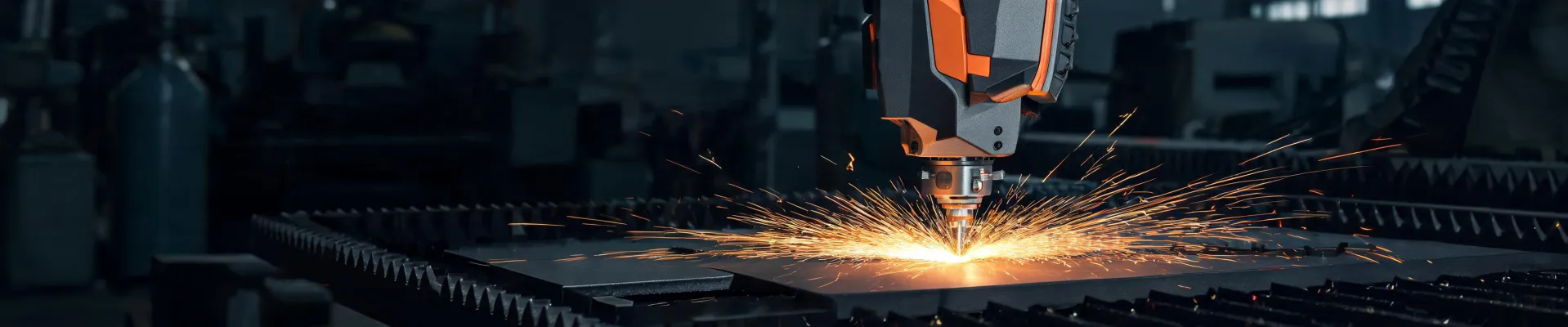
A Quality Inspector’s Bodor Laser Story: Tube Cutting, Handheld Welding, and the Specs That Saved the Project
Posted on 2026-09-14 by Jane Smith
Q1 2024: The order that broke our old process
I’m the quality and brand compliance manager at a mid-sized metal fabricator in Ohio. I review every machine spec, weld coupon, and first-article report before it reaches our customers—roughly 40 vendor packages per quarter. I rejected 28% of first deliveries in 2024 because of spec drift, packaging damage, or incomplete documentation.
In February 2024, we won a contract for modular racking. Not huge, but annoying: 1,200 tube assemblies per month, each with 14 welds. Our old process used a DeWalt plasma cutter for the tube profiles, then a lot of grinding before MIG welding. The DeWalt plasma cutter was fine for rough cuts. Honestly, it still is—for field work and thick plate. But on 1.5-inch square tube, the cut edge was basically a suggestion. We were sanding more than welding.
Our customer cut the lead time from six weeks to four. That was the moment efficiency stopped being a “nice to have.”
The first quote and the first red flag
We looked at a fiber laser tube cutter, a handheld fiber laser welding machine, and—because several jobs need copper-brass joints—fiber laser brazing. I got quotes from three suppliers. One was a European brand with a great reputation and a scary price. One was a used machine with no service history. The third was a Bodor laser tube cutting machine, quoted through Bodor Laser USA.
The Bodor quote was lower. Did I believe the first number? Not entirely. The configuration we needed—6 kW, automated loading, tube diameters up to 6 inches—came in around $135,000 (based on our Q2 2024 quote; verify current pricing). A comparable European setup was closer to $190,000. The upside was about $55,000 in savings. The risk was a main line going down during a rush. I kept asking myself: is $55,000 worth potentially missing a $90,000 order?
Everything I’d read about Chinese laser machines said service and documentation would be the weak point. In practice, Bodor’s US support was better than I expected—though not perfect. More on that later.
The evaluation: specs first, brand second
I don’t sign off on a machine because the booth looks good. The checklist: first-article inspection, weld coupon, safety interlock. In that order.
We sent Bodor three test drawings. The tube cutter had to hold ±0.15 mm on a 3 mm wall. That’s not exotic, but it’s tight enough that thermal distortion matters. We asked for cut samples and a weld coupon using their handheld fiber laser welding machine. For the brazing sample, we wanted to see if fiber laser brazing could replace a two-step furnace process on a small brass bracket.
The samples arrived in 10 days. The tube cuts were good. The handheld welds looked clean. But the brazing sample had porosity on two of five coupons. Bodor’s engineer said it was likely shield gas flow and suggested a different nozzle. That was a yellow flag, not a deal-breaker. We retested with our own operator. Porosity dropped to zero when we bumped the flow and cleaned the joint properly.
Then I did the boring part: I read the manual. Per FDA CDRH (21 CFR 1040.10), laser products must meet performance standards, and Class 4 lasers—including most handheld fiber laser welders—require key controls, interlocks, and warning labels. OSHA’s Technical Manual adds that beam and fume hazards need engineering controls and PPE. We weren’t going to bolt a Class 4 laser onto a welding table without a safety plan. So we built one.
The safety plan nobody wanted to write
Here’s what we required before the first machine landed:
- Interlocked enclosure for the tube cutter.
- Laser safety eyewear sized to the wavelength, not just “dark glasses.”
- Local exhaust at the weld head and a fume plan.
- Written standard operating procedure for the handheld unit.
- Training sign-off for three operators, including me.
That list cost us about $9,000 and two weeks. It also kept us out of a very uncomfortable conversation with OSHA.
The arrival and the first rejection
The Bodor tube cutter arrived in May 2024. Install took four days. The first production run was a disaster in miniature: 80 parts, 11 rejected. The cut length was drifting by 0.4 mm on one side of the tube. Our tolerance was ±0.15 mm. The vendor’s tech said it was “within industry standard.” I said our standard is the contract.
We rejected the run. They realigned the chuck and updated the nesting parameters. The redo cost them about $3,200 in parts and labor. I didn’t enjoy it. But that’s the job: if you accept the first drift, you’ll be chasing it for a year.
Even after choosing Bodor, I kept second-guessing. What if the spare-parts channel was slow? What if the software updates broke the post-processor? The three weeks until the first service call were stressful. Didn’t relax until a chiller fault was diagnosed and fixed within two business days. Not free, but not a month either.
After the realignment, the tube cutter held ±0.08 mm on the next 500 parts. The handheld fiber laser welding machine became our go-to for outside corners and repair welds. Fiber laser brazing replaced the furnace process on the brass bracket, cutting cycle time from 22 minutes to 9. The DeWalt plasma cutter stayed in the shop for field repairs and thick plate. It’s not either/or. It’s the right tool for the right tolerance.
What efficiency actually looked like
We didn’t become a different company. We just stopped moving parts between three machines. The tube cutter eliminated a secondary grinding step. The handheld welder cut heat distortion enough that we could weld thin-wall tube without a fixture change. Fiber laser brazing gave us a cleaner joint on brass without flux.
Turnaround on the racking job went from 6 days to 4. Scrap dropped from 7% to 2.1% over the first 90 days. That’s real money. But the efficiency only showed up after we fixed the first-article process. If we had skipped that, we would have shipped bad parts faster. That’s not efficiency. That’s a lawsuit with a delivery date.
According to ISO 9013, thermal cut quality is classified by tolerances and surface condition. We used that standard to write our incoming inspection. It gave us a common language with the supplier. Plus, it made the “industry standard” argument go away. You can’t argue with a class designation.
Where the risk remains
Bodor is not a no-brainer for every shop. If you run one shift, cut mild steel under 3 mm, and already have a good plasma table, the payback may not be there. If you need a machine tomorrow, the lead time is real. If you don’t have a maintenance tech who can read a schematic, any advanced laser will be painful—regardless of the logo.
Then again, the same is true for a $200,000 European machine. The brand doesn’t run the preventive maintenance. Your people do.
The lesson I keep relearning
Quality is not a department. It’s a set of gates. For us, the gates were:
- Written spec with tolerances and acceptance criteria.
- First-article inspection before full production.
- Safety compliance before power-on.
- Spare-parts and service expectations in the contract.
Bodor passed because they eventually met the gates, not because they were cheap. The Bodor laser USA team was responsive, but I still had to reject a batch to get the alignment right. That rejection was the best thing we did. It set the tone for the next 12 months.
Bottom line: efficiency is a competitive advantage, but only when it’s built on verification. The machine can cut faster. It cannot decide what “good” means. That’s still my job.

Jane Smith
I’m Jane Smith, a senior content writer with over 15 years of experience in the packaging and printing industry. I specialize in writing about the latest trends, technologies, and best practices in packaging design, sustainability, and printing techniques. My goal is to help businesses understand complex printing processes and design solutions that enhance both product packaging and brand visibility.