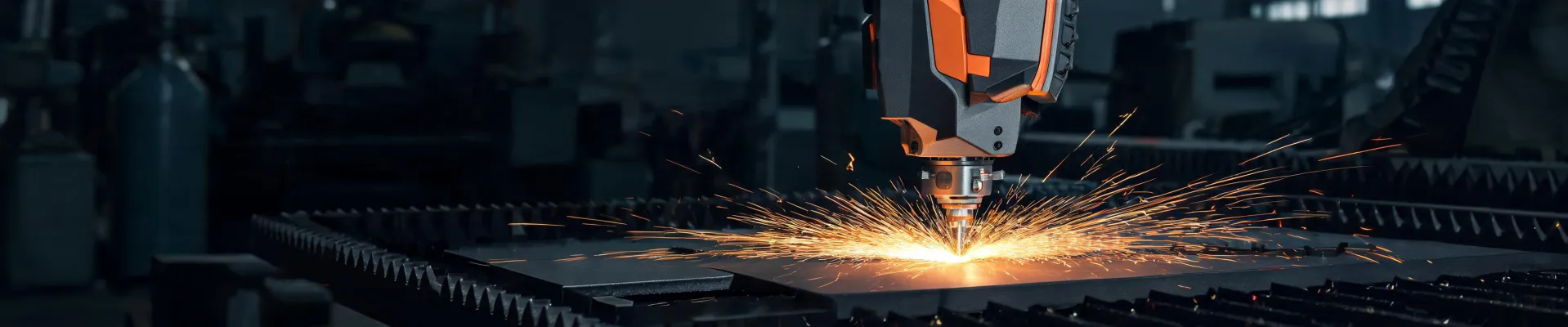
I Rejected a "Fully Compliant" Laser Machine — Here's What That Cost Me
Posted on 2026-09-11 by Jane Smith
The Statement That Cost Us $22,000
"It's within industry standard."
I heard that in early 2024 from a supplier whose laser tube cutting machine had failed our incoming inspection. The machine's positioning accuracy was off by 0.3mm against our spec of 0.1mm. Their response? That 0.3mm was "typical for this price point."
Here's the thing: their definition of "compliant" and mine were not the same thing.
We rejected the batch. They redid it at their cost. And the project timeline slipped by three weeks. That delay cascaded into a $22,000 problem when our customer had to source replacements.
I've been reviewing industrial equipment deliveries for over four years now. Roughly 200 units a year pass through my desk. And if there's one thing I've learned, it's this: the cost of a laser machine is never just what's on the invoice.
Let me explain what I mean.
What "Bodor Laser Cost" Actually Means
When people ask me about Bodor laser cost, they're usually asking the wrong question. They want a number. A dollar figure per watt or per cutting bed size.
But the real cost is a function of three things: the purchase price, the cost of downtime when it fails, and the cost of rework when it doesn't match specs.
I've evaluated Bodor's tube cutting machines against European competitors. On paper, the Bodor laser tube cutting machine specs—positioning accuracy, repeatability, max cutting thickness—are competitive. The purchase price is lower. That's real.
But what I care about is: does it hold those specs after 6 months of continuous operation? Does the after-sales support response time match what's in the contract?
My advice: on any laser purchase, ask for a sample test first. It's a 5-minute decision that saves 5 days of rework.
Laser Marking on Plastic: The Verification Step Most People Skip
Take laser marking machine plastic applications. This is where people assume "it'll just work."
But the variables here are wild: plastic type (ABS, PP, PC, POM), additives, color, surface finish. A machine that marks perfectly on ABS might produce zero contrast on black PP.
I've seen buyers order a marking machine without testing it on their actual material. Honest to god, they end up reordering a different configuration six weeks later. I've lost count of how many times I've seen this.
If you're evaluating a laser marking machine plastic setup, ask for sample tests on your exact parts. Not their demo material. Yours. Get that sample early, save yourself weeks of frustration.
Why I Almost Made the Wrong Call — and How I Got Lucky
Let me be honest about something. Before that $22,000 incident, I nearly repeated the same mistake on another project.
I went back and forth between Bodor and a more expensive European brand for two weeks. Bodor's pricing was better; the performance specs looked comparable. But my gut said something was off. Or maybe it was the opposite — my gut said the cheaper option might actually be fine, and I was just being paranoid.
I couldn't decide. What I ended up doing was requesting sample cuts from both on our actual tube profiles. That's what broke the tie.
So glad I did. The difference wasn't in the brochures. It was in the edge quality on one specific 3mm stainless profile we use constantly.
Now I include a sample verification clause in every contract. That's the cheapest insurance policy I've ever written.
"But I Need It Fast"
I know what you're thinking. Sometimes deadlines force you to skip steps. Sometimes you can't wait for samples.
My answer: If you don't have time to do it right, when will you have time to do it over?
"Fast" gets used as an excuse to skip verification. But the fastest path is actually doing it right the first time. Once production is bottlenecked by a machine that doesn't deliver, that's when the real expense starts.
The Broader Laser Landscape
The laser world spans everything from industrial fiber lasers cutting 12mm steel to perioral CO2 lasers used in dermatology clinics. The aftercare for a CO2 laser on skin has nothing to do with calibrating a cutting head or replacing a nozzle. Completely different universe.
But the principle is the same: verify before you commit. Whether it's a marking machine, a cutting system, or a medical laser unit — the extra hour you spend testing saves days of headaches later.
For plastic marking specifically: check material compatibility before purchase. Industry color tolerance standards say Delta E < 2 is critical for brand colors — but laser marking is usually about contrast, not color. Still, the same logic applies: measure it, don't assume it.
The Bottom Line
Don't just compare price tags. Compare: sample verification cost, downtime impact, cost of rework when specs drift.
That machine I rejected? The supplier initially said my requirements were too strict. They came around. They realized I was saving them from a bigger problem.
If you're shopping for laser equipment — Bodor, European brands, whatever — do the extra step. Verify the specs. Test your actual material. Check the edge quality. Every time.
Five minutes of checking beats five days of fixing.
Four years in, I haven't been wrong about that yet.

Jane Smith
I’m Jane Smith, a senior content writer with over 15 years of experience in the packaging and printing industry. I specialize in writing about the latest trends, technologies, and best practices in packaging design, sustainability, and printing techniques. My goal is to help businesses understand complex printing processes and design solutions that enhance both product packaging and brand visibility.