Fiber Laser vs CO2 vs Tube Laser: A Quality Manager’s Honest Guide to Buying Equipment That Passes Spec
Posted on 2026-09-10 by Jane Smith
-
Stop Asking “Fiber or CO2?” — Start With the Part
-
Scenario 1: You Cut Flat Sheet Most Days — Fiber, No Debate. But Don’t Overbuy Power
-
Scenario 2: Marking Brass and Black-on-Aluminum — “Any Fiber Laser Can Do It” Is a Red Flag
-
Scenario 3: Tube Work That’s More Than a Side Hustle — Consider a Dedicated Bodor Tube Laser Cutting Machine
-
What About CO2 “Resurfacing” and the Rebuild Trap?
-
How to Know Which Scenario You’re In
Stop Asking “Fiber or CO2?” — Start With the Part
Every month, I approve or reject parts before they leave our shop. Roughly 200 to 250 unique part numbers a year—edge quality, hole roundness, mark contrast, coating adhesion. If it doesn’t match the print, it goes back.
So when someone asks me “Should we buy a fiber laser or a CO2 laser?”, I get it. The marketing noise is real. But honestly, fiber vs CO2 is the wrong question. The first question is: what material are you processing? The second is: what geometry? After that, the machine type almost picks itself.
Here’s what I mean. Three situations, three different answers.
- Your stock rack is mostly flat sheet metal → you need a fiber laser cutting machine, not a CO2.
- Your parts need permanent marks on brass, aluminum, or stainless → you need a fiber marking laser with the right pulse controls.
- Your work involves tube and structural sections with holes, notches, or angle cuts → you should seriously evaluate a dedicated tube laser cutting machine instead of improvising on a flatbed.
This guide assumes you’re a metal shop. If you mostly cut acrylic, wood, or leather, get a CO2 and ignore most of what follows.
Scenario 1: You Cut Flat Sheet Most Days — Fiber, No Debate. But Don’t Overbuy Power
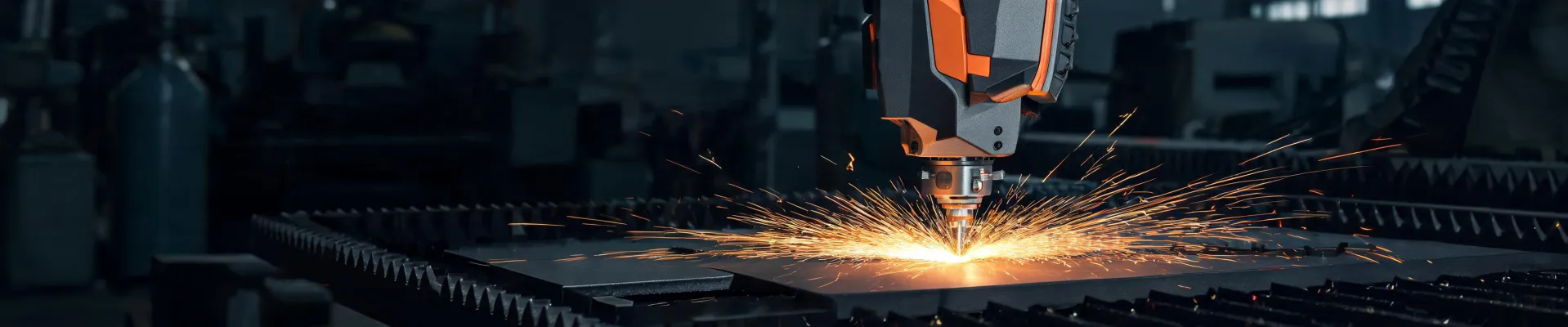
If your shop cuts carbon steel, stainless, or aluminum sheet, the fiber vs CO2 debate is already settled. A fiber laser’s 1.06µm wavelength is absorbed by metal directly. CO2’s 10.6µm beam mostly reflects off bare metal, which is why CO2 machines need so much more power to do the same job.
We switched to fiber for sheet cutting in 2020. The operating cost difference was way bigger than I expected. No resonator mirrors to keep aligned. No gas refills for the beam path. About half the electricity on comparable cuts—based on our own power readings, not a sales sheet.
But here’s the counter-intuitive part: don’t get dragged into a power race.
I’ve rejected parts that looked great but the job itself should never have been quoted on that machine. The shop bought a 12kW unit for thin-gauge work and overpaid on purchase price, floor space, and standby power. If your daily jobs top out at 8mm mild steel, a 6kW or 8kW fiber is enough. The extra power sits idle, and you’re the one paying for it.
Right-sized is better than biggest. Simple.
Scenario 2: Marking Brass and Black-on-Aluminum — “Any Fiber Laser Can Do It” Is a Red Flag
This one gets under my skin because marking failures are the most common rejection I write.
Fiber laser brass marking gets a bad reputation from people using the wrong source. Bare brass is reflective. If you hit it with long pulse widths and too much average power, the energy bounces and the mark comes out pale, streaky, or non-existent. We run a 20W MOPA-style fiber marker for brass parts. With the right pulse settings, the mark is a clean, consistent dark gray that doesn’t rub off. But “fiber laser, brass material” in a spec sheet tells you almost nothing—the settings tell you everything.
Then there’s the phrase we hear constantly: “fiber laser black on aluminum.” People assume the laser burns the surface black. It doesn’t. It creates a micro-structured oxide layer that reads as black. The window between “too little energy—still silver” and “too much energy—flaky gray” is small.
Here is what I recommend to every shop before they buy a marking laser:
- Send your actual material—not their demo aluminum—to the vendor and ask for test marks.
- Demand the full parameter set: speed, frequency, pulse width, hatch pattern.
- Run a simple tape-pull test on their sample. If the mark lifts, reject it.
Per FTC advertising guidance (ftc.gov), a claim like “guaranteed black marking on aluminum” has to be substantiated. In practice, that means the vendor should show you documented settings and test results, not just a slogan. And it costs almost nothing to test: as of January 2025, a USPS First-Class large envelope is $1.50 (usps.com) to send a small coupon to a shop for verification. There is no excuse for buying blind.
Scenario 3: Tube Work That’s More Than a Side Hustle — Consider a Dedicated Bodor Tube Laser Cutting Machine
I still kick myself for waiting until 2024 to add a dedicated Bodor tube laser cutting machine to our floor. Before that, we ran tube on a flatbed fiber machine with a rotary attachment. It worked—technically. But it caused more problems than it solved.
Long tubes sagged in the middle. The rotary fixture left witness marks near the chuck. Every setup took 20 to 30 minutes. Short offcuts were wasted because the machine couldn’t index the full stick cleanly. I approved those rejected parts, and they added up.
Everything I’d read said a dedicated tube machine only earns its keep in high-volume tube mills. That was wrong—for us, at least. Our tube work is maybe 15 to 20 percent of the job mix. But those jobs involve round tube, square tube, and channel with holes, notch cuts, and bevels. A dedicated tube machine handles all of that with proper support and software. Our rework rate on tube parts dropped noticeably in the first quarter after installation.
That said, don’t read this as “everyone needs a tube machine.” If your tube work is occasional straight cutoffs for handrails or simple frames, a saw plus a rotary attachment on a flatbed is perfectly adequate. Buying a dedicated Bodor tube laser cutting machine for that volume would be overkill.
If you’re checking current models, go to the Bodor laser official website (bodor.com) rather than relying on reseller listings. The lineup changes, and specifications need to be verified—I’ve seen old data floating around on third-party sites.
What About CO2 “Resurfacing” and the Rebuild Trap?
Yes, let’s talk about the CO2 elephant in the room.
A CO2 laser resurfacing job—replacing the gas, cleaning optics, realigning the resonator—sounds like a reasonable way to bring an old system back to life. We did that in 2021. Cost us about $4,000. The unit came back with maybe 75 percent of its original power. Three months later, it failed throughput standards on a job that barely paid for the repair.
If your material mix is metal, CO2 repair money is usually better spent as a down payment on fiber. If you genuinely process acrylic, wood, paper, or textiles, CO2 is still a legitimate tool—but don’t let an old CO2 machine convince you that metal work is a good use for it. The physics hasn’t changed.
How to Know Which Scenario You’re In
Still not sure? Walk through your shop and answer these three questions:
1. What’s in your material rack? If you see mostly flat sheets of steel or aluminum, you’re in Scenario 1. Buy a fiber cutting machine sized to your thickest regular job, not the thickest job you want to brag about.
2. What do your finished parts need? If every part gets a logo, serial number, or data matrix code that has to survive handling, you’re in Scenario 2. Invest in a marking laser with adjustable pulse controls and build a sample-approval step into your purchase contract.
3. How much tube stock do you burn through? If tube and structural sections are a weekly thing—not a monthly thing—calculate the real cost of your current process. Count setup time, rejected parts, and wasted material. If a dedicated tube machine would pay for itself within two years, that is your answer.
There is no universal machine that does all three perfectly, and the shop that tells you otherwise is selling a compromise. Knowing which scenario you’re in is the difference between buying a tool and buying a trophy.
Specs accurate as of January 2025. Bodor’s product lineup changes, so verify current details and parameters before making a purchase decision.

Jane Smith
I’m Jane Smith, a senior content writer with over 15 years of experience in the packaging and printing industry. I specialize in writing about the latest trends, technologies, and best practices in packaging design, sustainability, and printing techniques. My goal is to help businesses understand complex printing processes and design solutions that enhance both product packaging and brand visibility.