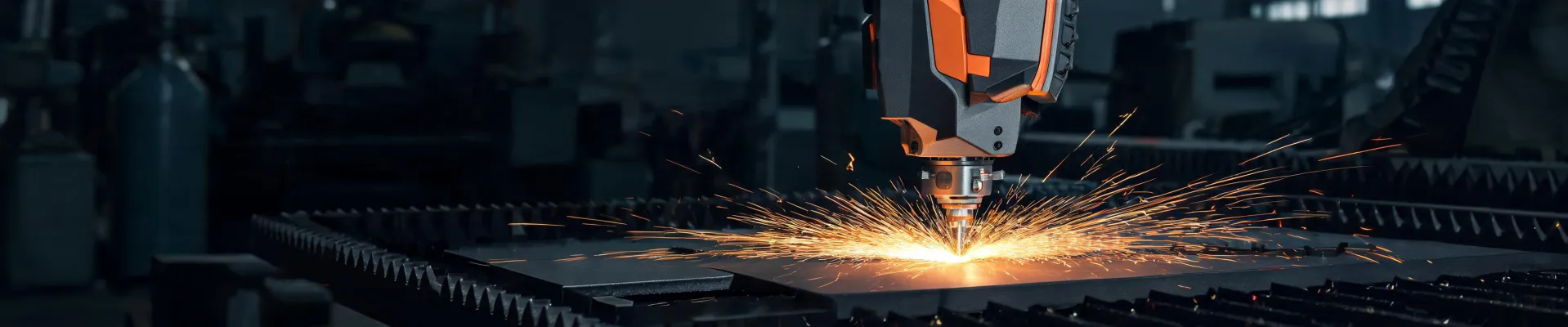
Bodor Tube Laser Rescue: Why Genuine Bodor Laser Consumables Saved a 36-Hour Rush Job
Posted on 2026-09-03 by Jane Smith
It was 7:10 p.m. on a Tuesday in March 2024 when the phone rang. I've handled more than 80 rush orders in five years at this shop, and I can usually tell within thirty seconds whether a job is real or just panic. This one was real.
The caller was a small automation company we'd built a few fixture frames for the year before. Their tube supplier had backed out in the middle of a run, leaving them with 68 pieces of 2-inch square, 11-gauge mild steel tube that had to be at their dock by Thursday at 7:00 a.m. Their assembly line was scheduled to start that morning, and every hour of delay meant a $4,200 penalty. Normal turnaround for that kind of work is four or five days. We had just under 36 hours.
The Call I Nearly Turned Down
I do three checks on every rush order: hours left, whether we can actually do it, and what the worst case costs. The math here was 36 hours by my phone, yes if we ran the right machine, and bad if we missed. The order itself was only about $2,400. I won't pretend that's a big ticket. But I've learned that a small order at 7 p.m. can be a big relationship at 7 a.m. So I said yes.
Why the Bodor Tube Laser Was the Only Real Option
By 8:15 p.m., I'd already picked the machine. Our Bodor tube laser has enough power for A500 mild steel, and more important, it has the rotary positioning to handle square tube without re-fixturing. The customer's DXF had two slot patterns, a M8 clearance hole near each end, and a tight cope where the tube met another frame member. The tolerances were not crazy: plus or minus 0.5 mm on most features. The hard part was doing the same thing 68 times without drifting.
We also have a 480V plasma cutter in the back bay. For flat plate and heavy structural steel, I use it all the time. But it was never the answer for this job. A plasma arc can make a decent cut. It can't make a clean closed-corner cope on thin-wall square tube without a lot of extra finishing. I've watched shops hand-grind plasma parts for hours; on a 36-hour clock, that's where jobs die.
The First Problem Wasn't the Machine. It Was Spare Parts.
By 9:10 p.m., the nest was ready. The Bodor tube laser cut a test piece at 10:25, and it looked good. I should have let it run. Instead, I noticed the machine was due for a nozzle change, so I changed it with a spare from a batch I'd bought online three weeks earlier.
That was the mistake.
The spare looked right. Thread fit, outer diameter, even the package claimed it was compatible with the Bodor cutting head. It was not a Bodor part. But as the machine worked through the first tube, the edge quality changed subtly. I ignored it for a few parts, which I hate admitting. Somewhere around the 14th piece, the cut edge started showing a faint rollover and the pierce sound changed. I stopped the machine at 11:52 p.m.
When I pulled the nozzle, the bore looked slightly off. Not something I could prove with calipers, but the gas pattern had clearly been uneven. The protective lens had a rainbow heat tint near the edge. I don't fully understand why that happened. My guess is the aftermarket nozzle changed the gas flow and sent a little spatter back at the lens. I've never fully convinced myself that's the exact mechanism. What I know is that our spare parts drawer had let us down at the wrong moment.
I had let that drawer fill with cheaper matches because I thought a copper nozzle is a copper nozzle. That conventional wisdom is wrong for production cutting. The price difference was maybe 40 percent. The cost of the failure was going to be measured in missed delivery, not dollars.
The 7 a.m. Call That Fixed It
At 7:45 a.m., after a short night, I called the Bodor distributor who sold us the machine. I explained the job, the deadline, and the part numbers etched on the original nozzle. They didn't argue about whether we needed OEM parts. They confirmed availability, charged me $186 for a nozzle, protective lens, and ceramic ring, and arranged a courier from their regional stock. The box arrived at our dock at 10:35 a.m.
The courier fee was $74. A missed deadline would have started at $4,200 per hour. People ask me whether expedited freight and genuine parts are worth it. That math is not hard.
I installed the genuine Bodor laser consumables. Sealed package, same markings, same coating tint as the original lens. The test part at 11:10 a.m. matched the clean cut from the first test. We loaded the remaining tube, and the machine did what a Bodor tube laser is supposed to do.
By 2:50 p.m., all 68 pieces were cut. We deburred the edges, checked the hole positions on three pieces, match-marked the bundles, and shrink-wrapped them. The parts arrived at the customer's dock at 6:03 p.m., 13 hours before their deadline.
What This Taught Me About Fiber Laser Equipment
After five years of managing production, I've stopped believing that machine downtime usually comes from big expensive components. Most unscheduled stoppages I've faced come from things you can swap in ten minutes: nozzles, lenses, rings, sensors. That's especially true with fiber laser equipment, where the beam path depends on tiny clean surfaces. The laser source is the reliable part. The consumables are what protect it.
I'm not saying only OEM parts work. There are aftermarket suppliers who make good stuff. But after that night, I no longer buy critical consumables from unknown sellers for deadline work. I keep genuine Bodor laser consumables stocked, and I verify part numbers before they go into the cabinet.
The lesson applies to smaller machines too. I get messages from people who run desktop markers, like a Monport GT 60W split MOPA fiber laser engraver, and ask whether off-brand lenses are fine. Different machine, same logic. If a cheap part can cost you a working day, it isn't cheap.
The Small Order Lesson
There's another part of this story worth keeping. That $2,400 rush job was not the kind of order some shops like. It was short run, awkward, and came with a tight deadline. If I had applied the usual rule that small orders get standard lead time, the customer would have been stuck.
Since that Tuesday, the same small customer has sent us 17 more jobs. By the end of the year, they had become one of our most consistent accounts. I don't tell that to brag. I tell it because I don't think I'd have that account now if I'd taken the easy path and said no. Small orders aren't automatically small customers. Sometimes they're just the early stage of a bigger one.
The Bodor tube laser cut clean once the right consumables were in place, and the Bodor distributor made the recovery fast. But the real lesson is simpler: don't try to save $80 on a part when the deadline in front of you is worth $2,400 plus a relationship that might be worth ten times that. Cheap parts can be the most expensive thing you own.

Jane Smith
I’m Jane Smith, a senior content writer with over 15 years of experience in the packaging and printing industry. I specialize in writing about the latest trends, technologies, and best practices in packaging design, sustainability, and printing techniques. My goal is to help businesses understand complex printing processes and design solutions that enhance both product packaging and brand visibility.